Dish #1
Bandeja paisa
Region: Antioquia (Medellín and the coffee region)
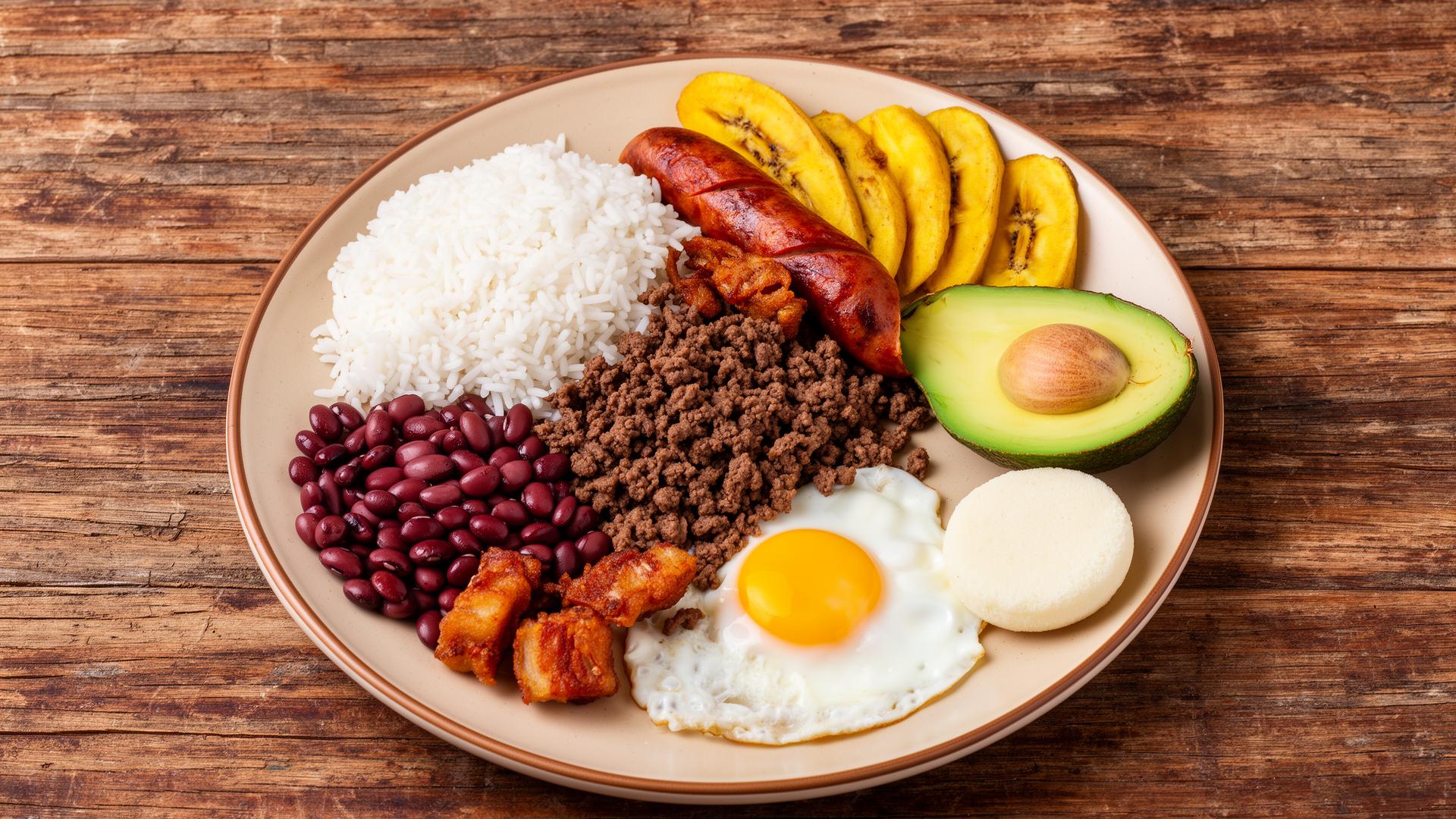
What is bandeja paisa?
Bandeja paisa is Colombia's most representative plate: a generous platter with beans cooked with hogao, rice, ground beef, crispy chicharrón, chorizo, blood sausage, fried egg, sweet plantain, avocado and arepa.
Main ingredients
- Red beans
- White rice
- Ground beef
- Chicharrón
- Chorizo
- Blood sausage
- Fried egg
- Sweet plantain
- Avocado
- Arepa
Origin and history
Born in the Antioquian coffee farms as hearty food for muleteers and farmers who needed energy for long workdays. Today it is a national symbol and culinary heritage of the paisa region.
Dedicated page for bandeja paisa
Step-by-step recipe, history, regional variants and FAQs.
Dish #2
Ajiaco santafereño
Region: Bogotá and Cundinamarca
What is ajiaco santafereño?
A thick, aromatic soup made with three potato varieties, shredded chicken and guascas herb, which gives it its unique flavor. Served with heavy cream, capers and avocado on the side.
Main ingredients
- Chicken
- Three potato varieties (criolla, sabanera, pastusa)
- Corn on the cob
- Guascas
- Heavy cream
- Capers
- Avocado
Origin and history
Bogotá's ajiaco is a Muisca heritage adapted with ingredients brought by the Spanish. It is the emblematic dish of the Colombian capital, traditionally served at Sunday family lunches.
Dedicated page for ajiaco santafereño
Step-by-step recipe, history, regional variants and FAQs.
Dish #3
Three-meat sancocho
Region: Valle del Cauca and Pacific coast
What is three-meat sancocho?
Hearty soup with three meats, root vegetables and herbs. Slow-cooked to concentrate the flavors, usually served with white rice, avocado and hot sauce.
Main ingredients
- Beef
- Chicken
- Pork ribs
- Yuca
- Green plantain
- Corn
- Potato
- Cilantro
Origin and history
A country tradition from Valle del Cauca, it is a celebratory family plate often cooked over wood fire on Sundays by the river.
Dedicated page for three-meat sancocho
Step-by-step recipe, history, regional variants and FAQs.
Dish #4
Colombian arepas
Region: Throughout the country (regional variants)
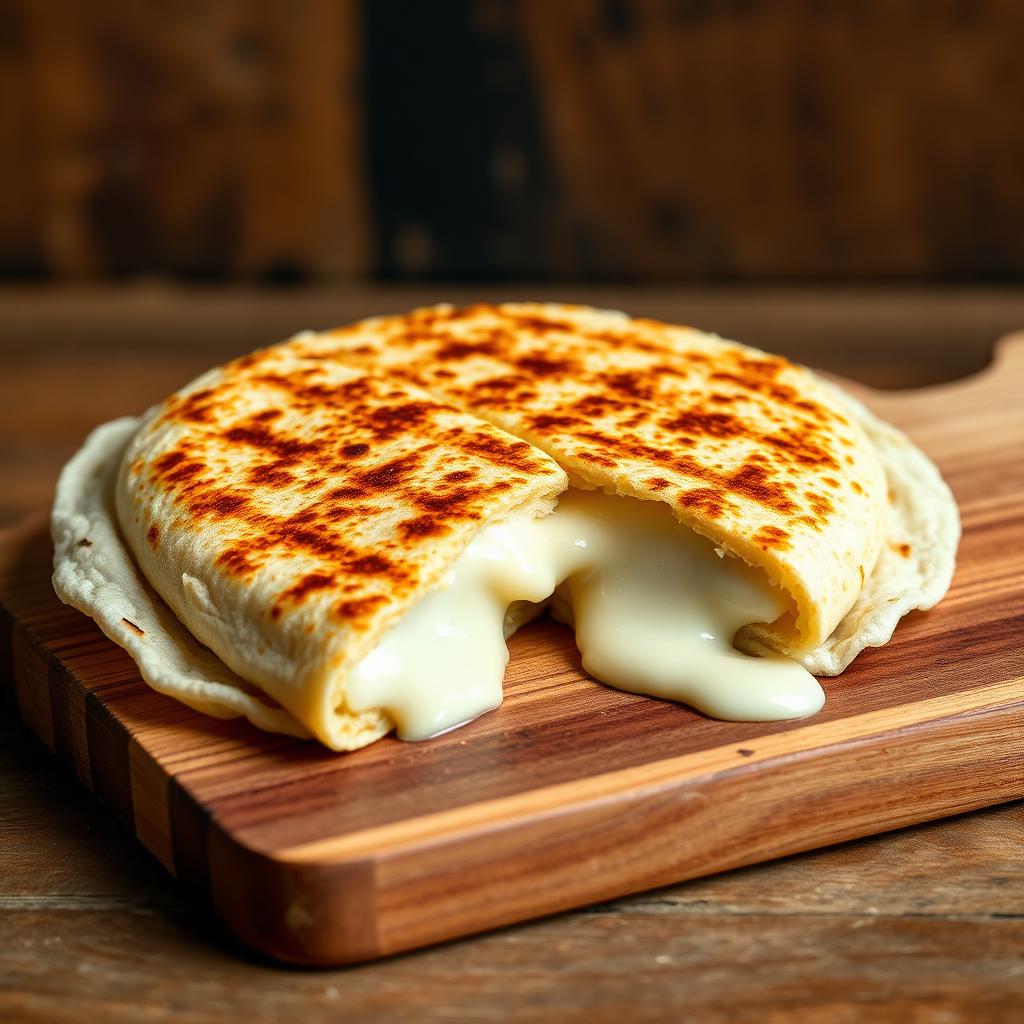
What is colombian arepas?
Round corn cakes griddled, baked or fried. Each region has its variant: paisa arepa (thin, unsalted), Caribbean egg arepa, sweet Boyacense arepa, Santanderean arepa with chicharrón.
Main ingredients
- White or yellow corn
- Cheese
- Butter
- Salt
Origin and history
Arepas are pre-Columbian indigenous heritage and have been a base of the Colombian diet for more than 3,000 years. Today they are intangible cultural heritage of Colombia.
Dedicated page for colombian arepas
Step-by-step recipe, history, regional variants and FAQs.
Dish #5
Colombian empanadas
Region: Throughout the country (especially Valle and Antioquia)
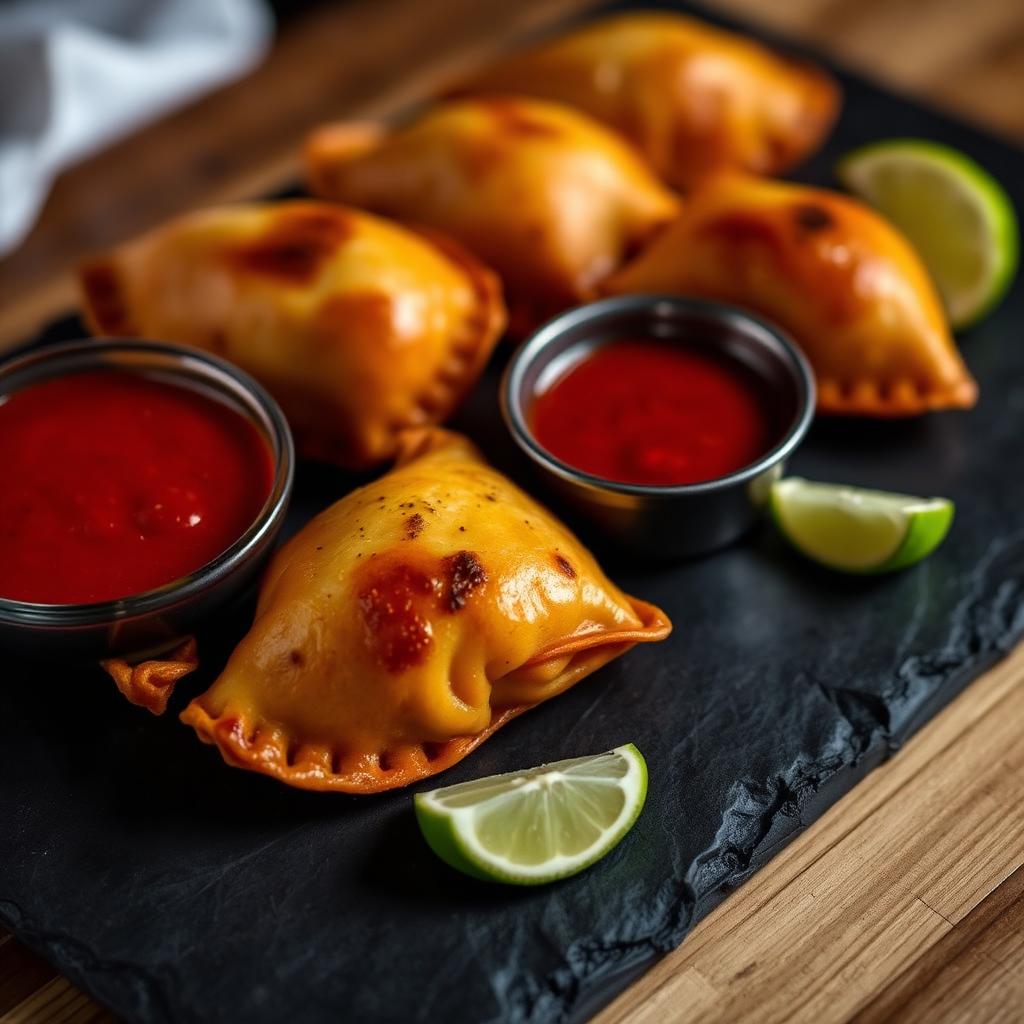
What is colombian empanadas?
Corn-dough empanadas, fried and traditionally filled with beef and potato stew. Served crispy outside, juicy inside, with avocado salsa or hot pepper.
Main ingredients
- Yellow corn dough
- Shredded beef
- Potato
- Onion
- Cumin
- Hot pepper
Origin and history
A local adaptation of the Spanish empanada — Colombians swapped wheat dough for yellow corn dough, giving them their unmistakable color and flavor.
Dedicated page for colombian empanadas
Step-by-step recipe, history, regional variants and FAQs.
Dish #6
Tolima-style lechona
Region: Tolima and Huila
What is tolima-style lechona?
Whole boneless pig stuffed with rice, yellow split peas and spices, slow-roasted for 8 to 10 hours until the skin is crispy and golden.
Main ingredients
- Whole pig
- Rice
- Yellow split peas
- Onion
- Spices
- Crispy pork skin
Origin and history
A ceremonial Tolima dish since colonial times, prepared for patron festivals, weddings and large family celebrations.
Dedicated page for tolima-style lechona
Step-by-step recipe, history, regional variants and FAQs.
Dish #7
Colombian tamales
Region: Tolima, Valle, Santander and the Coast
What is colombian tamales?
Corn dough stuffed with meats, chickpeas and vegetables, wrapped in plantain leaves and steamed. Each region has its recipe: Tolima, Valle, Santander or coastal.
Main ingredients
- Corn dough
- Chicken
- Pork
- Chickpeas
- Carrot
- Green peas
- Plantain leaves
Origin and history
A pre-Columbian indigenous recipe enriched with European ingredients. The Tolima tamal in particular is considered one of the country's best, traditionally served on Sundays for breakfast.
Dedicated page for colombian tamales
Step-by-step recipe, history, regional variants and FAQs.
Dish #8
Antioquian mondongo
Region: Antioquia
What is antioquian mondongo?
Thick beef-tripe soup slow-cooked with chorizo, bacon, vegetables and hogao. Served with rice, avocado, plantain and lime.
Main ingredients
- Beef tripe
- Chorizo
- Bacon
- Potato
- Carrot
- Cilantro
- Hogao
Origin and history
Inherited from the Arab-Spanish tradition, adapted by the paisas in their traditional restaurants. It is the quintessential Sunday lunch.
Dedicated page for antioquian mondongo
Step-by-step recipe, history, regional variants and FAQs.
Dish #9
Changua
Region: Boyacá and Cundinamarca
What is changua?
Breakfast soup made with milk, water and a whole poached egg, aromatized with green onion and cilantro. Served with toasted or stale bread.
Main ingredients
- Milk
- Water
- Whole egg
- Green onion
- Cilantro
- Toasted bread
Origin and history
Traditional Cundiboyacense breakfast of indigenous origin, adapted with the arrival of European milk. It was the energetic breakfast of the highland farmers.
Dedicated page for changua
Step-by-step recipe, history, regional variants and FAQs.
Dish #10
Patacones with hogao
Region: Caribbean and Pacific coasts
What is patacones with hogao?
Thick slices of green plantain fried, smashed and re-fried until crispy. Served with hogao, guacamole or fried fish.
Main ingredients
- Green plantain
- Salt
- Oil
- Hogao (tomato, onion, garlic)
Origin and history
An essential side on the Colombian coast, born in Afro-Caribbean cooking. It replaces bread in many coastal meals.
Dedicated page for patacones with hogao
Step-by-step recipe, history, regional variants and FAQs.